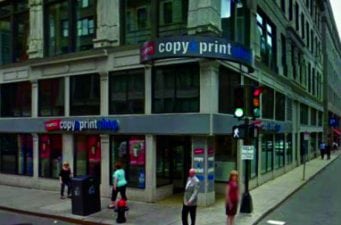
Pretty much any sign you can think of, we can make for you. But that doesn’t mean you can get government approval to place that sign where you want it. In fact, the process of getting approval for business signage is a lot more complex than you probably imagine. It involves dealing with many different departments, agencies, and governments – depending on where you plan to place the sign – and it also involves meeting a myriad of specific limits, requirements, and standards that may or may not seem entirely sensible to you. In Boston, just to begin somewhere, the approval process requires that we submit an application to the Boston Redevelopment Authority for what they call their Comprehensive Sign
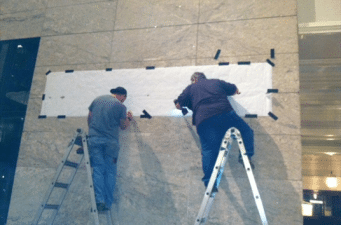
Metro Sign & Awning was pleased to partner with Lincoln Property Company, Shawmut Construction, and CBT Architects on the stately revitalization project at 53 State Street in Boston. The first part of the story can be found in a previous post. The Right Signs, Right on Time – 53 State Street, Part 2 The exterior signage installation at 53 State Street was involved, as the wiring of each letter had to be inserted through the panels, and our installers couldn’t be sure what was behind the panels until they started the job. Section details of drawings provided don’t always match “in field” conditions. (Otherwise known as life in the real world!) Our partners know they can rely on us, whatever
New ADA(Americans with Disabilities Act) regulations regarding signs went into effect March 15, 2012. The 2010 Standards set minimum requirements – both scoping and technical – for newly designed and constructed or altered State and local government facilities, public accommodations, and commercial facilities to be readily accessible to and usable by individuals with disabilities. Are you compliant? Do you have to be? Here, some quick answers to some of the questions we’re most often asked. Q: Do I have to worry about ADA regulations? A: Just about every business that provides goods or services to the public must comply. There are 12 categories of public accommodations, including stores, restaurants, bars, service establishments, theaters, hotels,recreational facilities, private museums and schools, doctors’