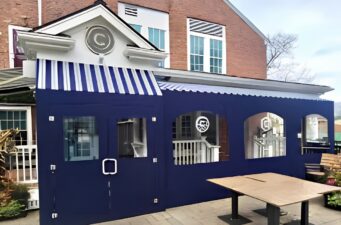
A sign company is easy to find. A sign company that manages the full process, from site evaluation and design through permitting, fabrication, and installation, is a different conversation. Metro Sign & Awning has been that partner for commercial property owners, developers, facility directors, and institutional clients across Greater Boston and eastern Massachusetts for years. The work spans retail plazas and corporate campuses, healthcare facilities and educational institutions, multi-tenant developments and standalone storefronts. This post is a look at the types of projects we execute in this market, what they involve, and why clients in the Boston area trust Metro Sign & Awning to get them done right. Exterior Signage That Performs in a Demanding Market The Greater Boston commercial
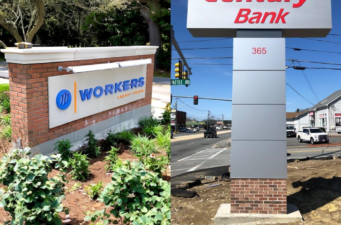
Your sign’s first job: get noticed. But in today’s crowded commercial environment, visibility alone isn’t enough. A successful pylon or monument sign also needs to reflect your brand, complement your property, and leave a lasting impression on the people passing by every day. Whether you’re managing a retail plaza, healthcare facility, corporate campus, or multi-tenant property, your exterior signage often becomes the first interaction customers have with your business. A poorly designed sign can blend into the background. A well-designed one can drive traffic, improve navigation, and elevate the perceived value of your property. At Metro Sign & Awning (MSA), we help businesses across the Boston area create pylon and monument signs that balance visibility, durability, compliance, and design —

A pylon sign can be one of the most powerful visibility tools for your business — but it’s also one of the most regulated. Unlike standard wall signs or storefront signage, pylon signs are tall, freestanding structures designed to be seen from a distance. That visibility comes with added scrutiny. Local zoning boards, building departments, and permitting offices closely regulate everything from height and placement to lighting and structural integrity. For business owners and developers in the Boston area, navigating these requirements can quickly become overwhelming. Miss a step, and you risk delays, redesigns, or even removal orders. At Metro Sign & Awning (MSA), we help clients simplify the process — managing regulations, permits, and approvals from start to finish

Most monument sign conversations focus on style and materials, but the biggest risks (and costs) usually sit below grade. Foundations, footers, and installation methods determine how long a sign lasts, how much it costs to install, and whether it needs to be redone later. Today’s monument sign design trends are increasingly shaped by what works in the ground, not just what looks good above it. Choices around direct-bury construction, concrete footings, and structural depth can add or save days of installation time and thousands in rework if they’re wrong. This guide looks at modern monument sign trends with buildability in mind. From materials and lighting to foundations, placement, and approvals, you’ll discover the best monument sign design trends in