How to Design an Eye-Catching Pylon or Monument Sign
Architectural Signage, Design/Build, Exterior Signage, Metro Sign, Metro Sign & Awning, Original Posts Architectural signage,commercial signage boston,Exterior signage,monument sign design,monument signs,pylon signsYour sign’s first job: get noticed.
But in today’s crowded commercial environment, visibility alone isn’t enough. A successful pylon or monument sign also needs to reflect your brand, complement your property, and leave a lasting impression on the people passing by every day.
Whether you’re managing a retail plaza, healthcare facility, corporate campus, or multi-tenant property, your exterior signage often becomes the first interaction customers have with your business. A poorly designed sign can blend into the background. A well-designed one can drive traffic, improve navigation, and elevate the perceived value of your property.
At Metro Sign & Awning (MSA), we help businesses across the Boston area create pylon and monument signs that balance visibility, durability, compliance, and design — all while supporting long-term business goals.
In this guide, we’ll break down the key design elements that make exterior signage stand out and perform.
Understanding the Difference Between Pylon and Monument Signs
Before diving into design, it’s important to understand the difference between these two popular signage types.
Pylon Signs
Pylon signs are tall, freestanding signs typically installed near major roadways or commercial entrances. Their primary goal is long-distance visibility, especially for drivers traveling at higher speeds.
They’re commonly used for:
- Shopping centers
- Gas stations
- Hotels
- Multi-tenant developments
- Large commercial properties
Monument Signs
Monument signs are lower-profile structures installed closer to ground level. They’re designed to integrate with landscaping and architecture while creating a polished, professional appearance.
They’re commonly used for:
- Corporate offices
- Schools and universities
- Healthcare facilities
- Residential developments
- Municipal properties
The right choice depends on your location, visibility needs, branding goals, and local zoning regulations.
Prioritize Visibility First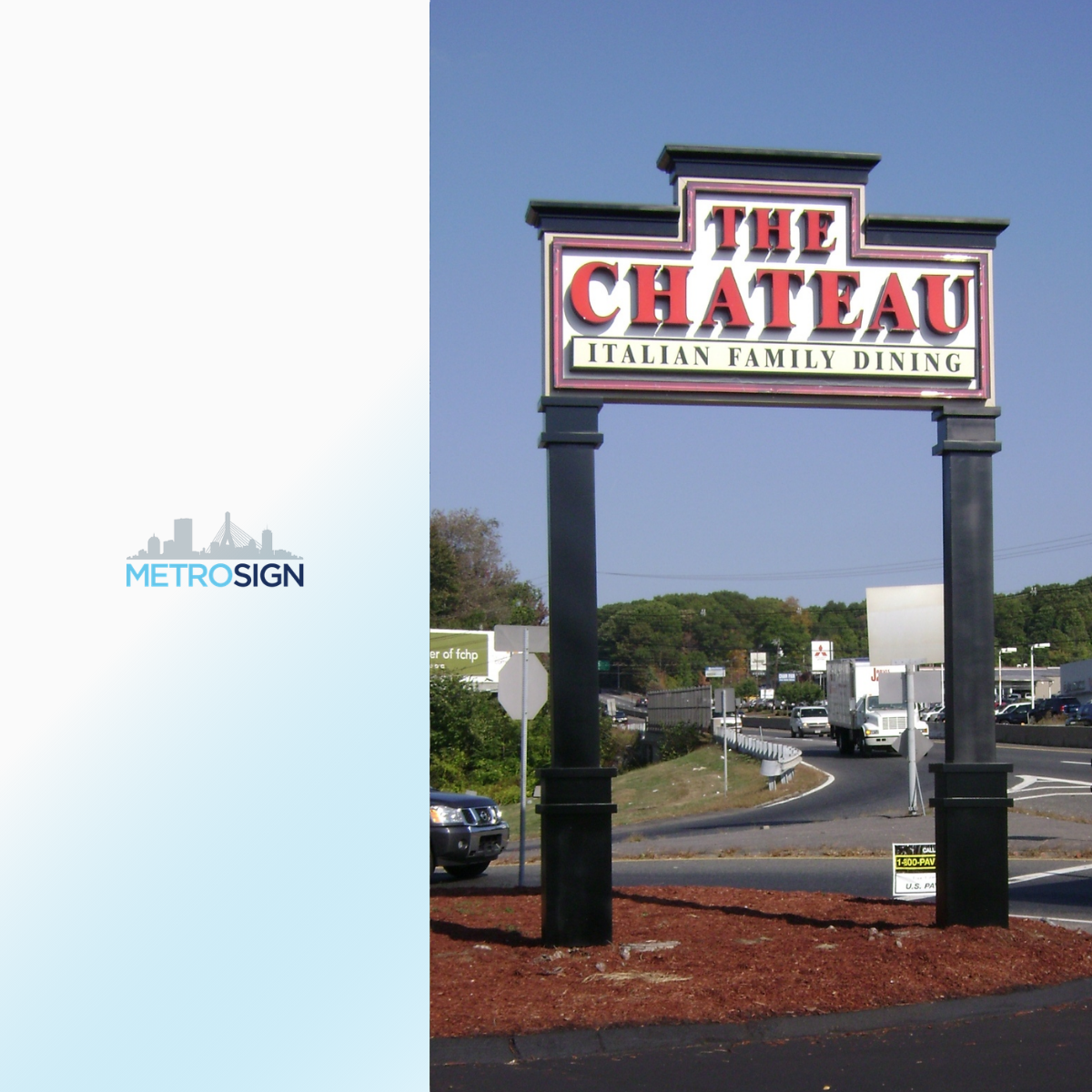
A beautiful sign means nothing if people can’t read it.
One of the biggest mistakes businesses make is prioritizing aesthetics over visibility. Effective exterior signage should be readable quickly — especially from moving vehicles or busy intersections.
Here are a few key visibility factors to consider:
Size & Scale
Your sign should feel proportional to both the property and viewing distance. Larger roads and higher traffic speeds often require taller signs and larger lettering.
Placement
Strategic placement is critical. Trees, utility poles, parked vehicles, and nearby buildings can all obstruct visibility if the sign is installed in the wrong location.
Viewing Angles
Think about how drivers and pedestrians approach your property. Your sign should remain readable from multiple directions whenever possible.
At MSA, we evaluate traffic flow, property layout, and sightlines early in the design process to maximize visibility before fabrication begins.
Typography Matters More Than You Think
Typography can make or break a sign.
Overly decorative fonts may look impressive up close but become difficult to read at a distance. Exterior signage works best when typography is clean, bold, and easy to process quickly.
Best practices include:
- Using simple, high-legibility fonts
- Avoiding excessive script or decorative styles
- Maintaining proper spacing between letters
- Prioritizing contrast between text and background
Remember: drivers often only have a few seconds to process your sign. Clarity always wins.
Lighting Can Transform Your Sign
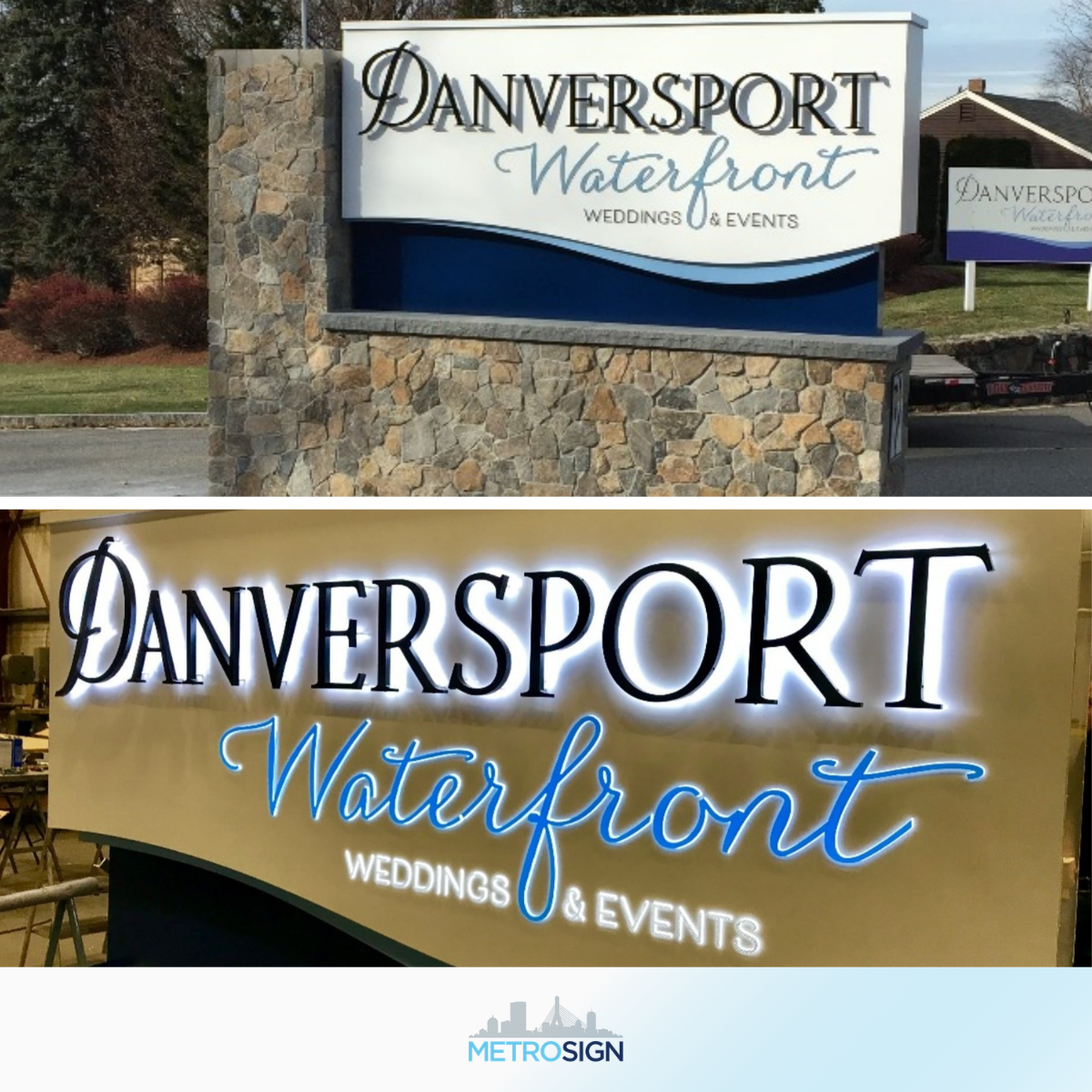 Lighting plays a major role in visibility, especially during early mornings, evenings, and poor weather conditions.
Well-designed illumination:
- Improves nighttime visibility
- Enhances curb appeal
- Increases perceived professionalism
- Helps businesses stand out in crowded commercial corridors
Popular lighting options include:
- Internal LED illumination
- Halo-lit dimensional lettering
- Ground-mounted uplighting
- Backlit panels
- Accent lighting for monument signs
LED systems remain the preferred option for most commercial properties thanks to their energy efficiency, longevity, and brightness control.
Material Selection Impacts Long-Term Performance
In New England, signage materials need to withstand snow, rain, UV exposure, and temperature fluctuations year-round.
Common materials for pylon and monument signs include:
- Aluminum for lightweight durability and corrosion resistance
- Steel for structural strength
- Acrylic panels for illuminated applications
- Stone, brick, or masonry accents for monument signs
- Powder-coated finishes for long-term color retention
Choosing the right materials doesn’t just improve durability — it also affects maintenance costs, branding consistency, and the overall appearance of your property.
Your Sign Should Match Your Brand and Property
An eye-catching sign should feel connected to its environment — not randomly placed in front of it.
The best monument and pylon signs align with:
- Architectural style
- Landscaping
- Brand colors and typography
- Lighting design
- Overall customer experience
For example, a luxury office park may benefit from a refined monument sign with stone accents and subtle lighting, while a busy retail plaza may require a bold illuminated pylon sign optimized for traffic visibility.
At MSA, we approach signage as part of the larger property experience — not just an isolated structure.
Don’t Forget About Permits and Compliance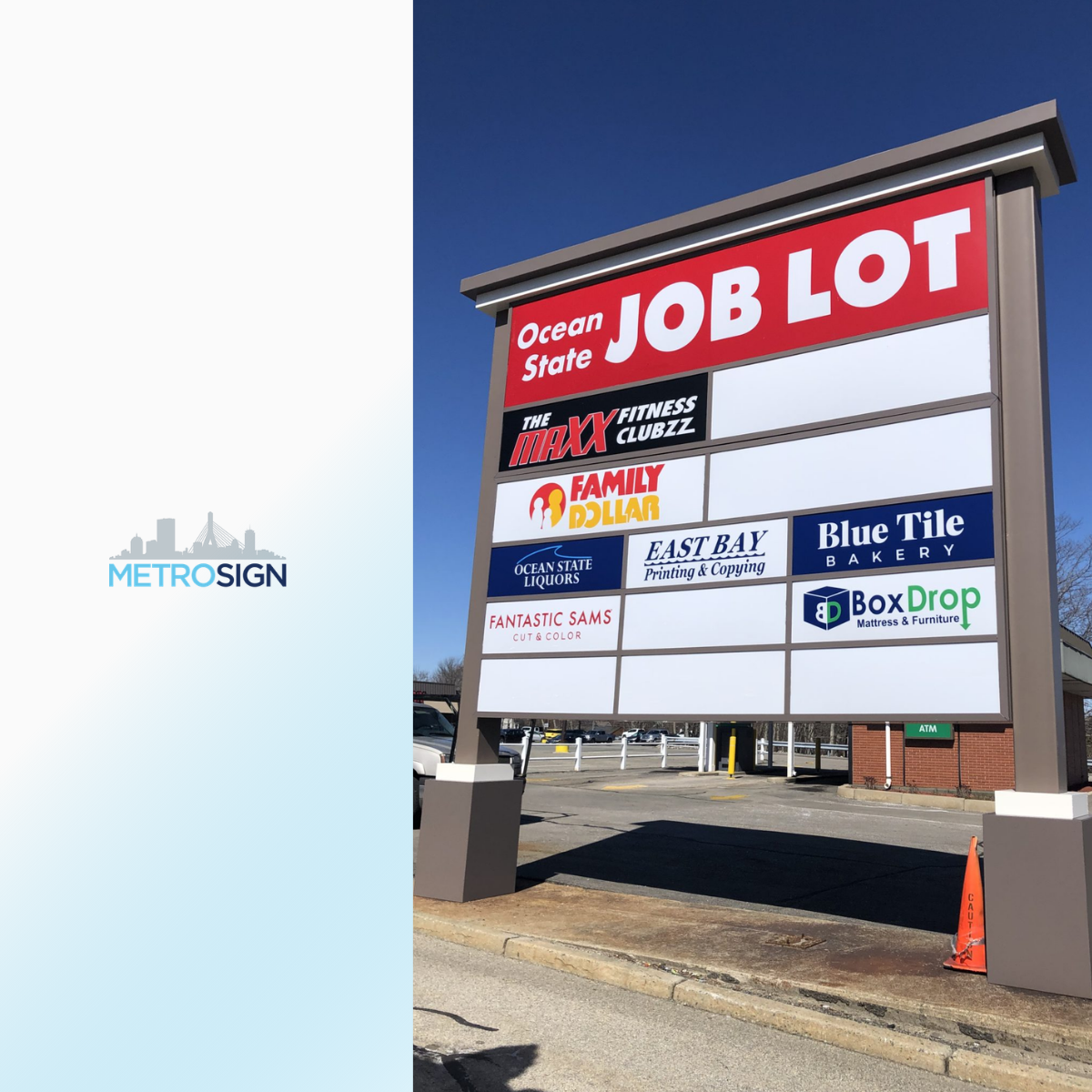
Even the best sign design can run into delays if local regulations aren’t considered early.
Many Boston-area municipalities regulate:
- Sign height
- Setbacks
- Illumination levels
- Total sign area
- Structural engineering requirements
Historic districts and planning boards may also impose additional restrictions related to materials, colors, or overall appearance.
That’s why our team handles permitting and code research during the design phase — helping clients avoid costly redesigns and approval delays later.
Why Businesses Work with Metro Sign & Awning
Designing an effective pylon or monument sign requires more than creativity. It requires experience, technical knowledge, and an understanding of how signage performs in the real world.
Businesses across New England trust Metro Sign & Awning because we provide:
- Full-service project management
- Strategic signage design guidance
- Local permitting expertise
- Durable fabrication and installation
- Reliable communication and timelines
From concept to installation, we create signage solutions built to attract attention and stand the test of time.
Planning a new pylon or monument sign for your property?
Talk to Metro Sign & Awning about designing a sign that improves visibility, enhances curb appeal, and supports your long-term business goals.