Fall School Signage Planning Starts Now
Digest, Exterior Signage, Functional Signage, Interior Signage, Metro Sign, Metro Sign & Awning, Others, Sign Design, Signage 101, Signage Tips ADA Signage,Campus signage Boston,Educational facility signage,Fall installation planning,Metro Sign & Awning,School signage,Wayfinding signsThe school year feels far away in June.
But for K-12 schools, colleges, and universities that need new or updated signage before students return in August or September, June is not early. For many facilities, it is already the last reasonable window to get projects moving.
Signage projects involve more steps than most administrators expect. Design approvals, permitting, material lead times, fabrication, and installation scheduling all need to happen in sequence. Compress that timeline too much and something gets rushed. Rush the wrong step and you are rescheduling an installation into the middle of move-in weekend.
At Metro Sign & Awning (MSA), we work with schools and universities across the Boston metro area to plan and execute signage projects that are ready when the campus is. This guide explains what to consider, what tends to cause delays, and why summer is the right time to act.
What Types of Signage Do Educational Facilities Typically Need?
Every campus is different, but fall signage projects at educational facilities often involve one or more of the following:
Exterior and Campus Wayfinding

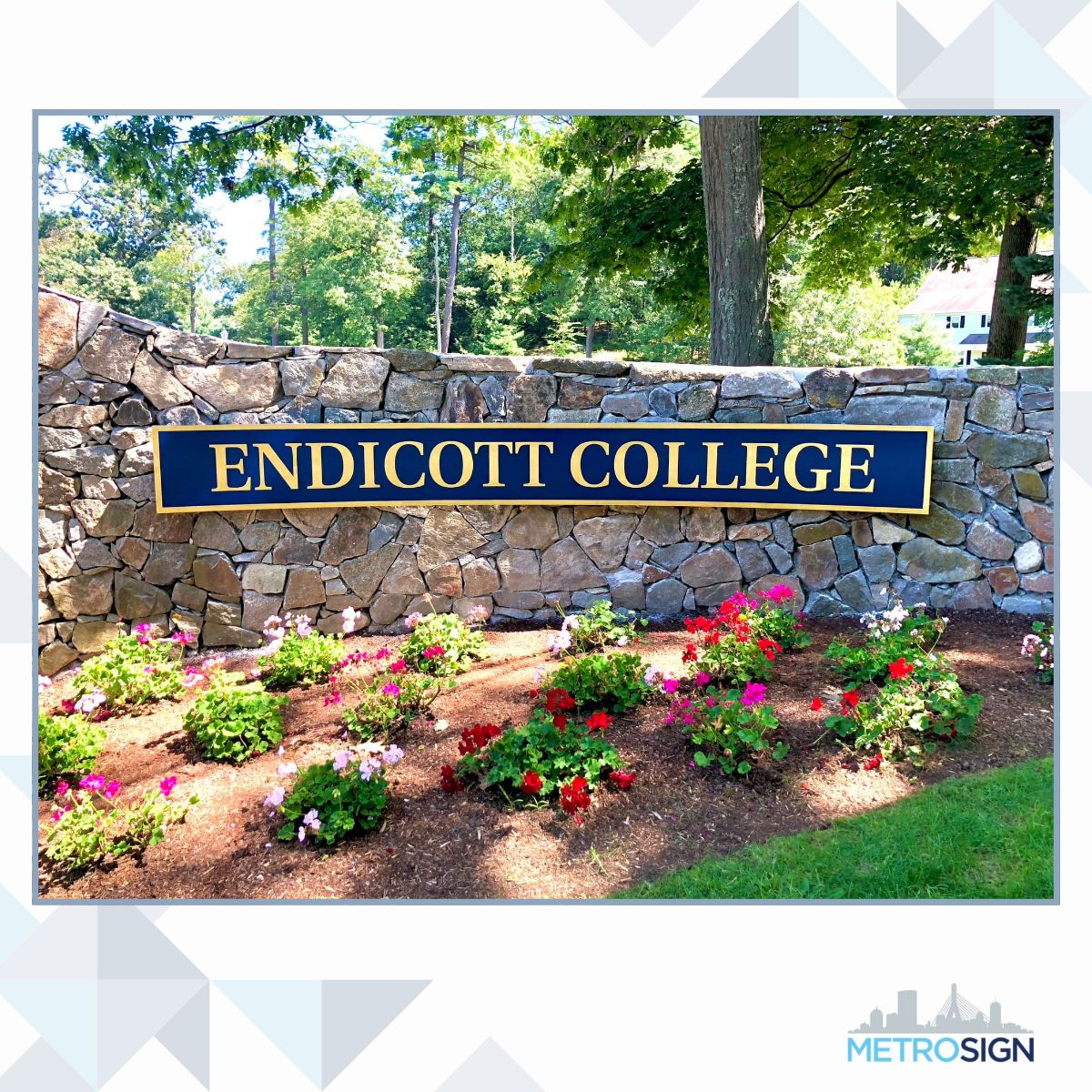
Monument signs, directional signs, parking identifiers, and building identification systems help students, parents, visitors, and vendors navigate the campus efficiently. Poorly designed or outdated wayfinding creates friction at every high-traffic moment: move-in day, orientation, athletic events, open houses.
ADA-Compliant Interior Signage
Room identification, restroom signs, elevator panels, tactile indicators, and accessibility signage must meet federal ADA standards and Massachusetts accessibility requirements. This is often the most overlooked category during renovations. When a building changes layout, departments move, or classrooms are renumbered, the signage needs to keep up.
Building Identification and Entrance Signage
Channel letters, dimensional signage, and illuminated building names reinforce institutional identity and help visitors locate main entrances quickly. These elements carry more weight than they appear to: a well-branded entrance communicates stability and professionalism to prospective students and their families.
Branded Environmental Graphics
Wall graphics, donor recognition displays, athletic facility branding, and campus identity elements that translate a school’s visual identity into physical space. These projects often surface during renovations or new construction, and they require close coordination between the sign company, facilities teams, and institutional brand standards.
Why Summer Is the Right Window and Why It Closes Faster Than Expected
Summer offers something the rest of the school year rarely does: access.
Interior installation work is significantly easier when classrooms are empty, hallways are quiet, and facilities staff can coordinate access without working around class schedules, events, or safety restrictions. Exterior projects move faster without bus traffic, parking conflicts, or the need to manage pedestrian flow around an active work zone.
But summer does not mean unlimited time. A project that kicks off in late June still needs to move through the following stages before installation can begin:
- Site evaluation and measurement
- Design development and institutional approval
- Permitting and code review (if applicable)
- Material procurement and fabrication
- Installation scheduling and execution
Depending on project scope, materials, and permitting requirements, that sequence can take eight to twelve weeks or longer. Waiting until July or August to start a conversation does not leave enough runway for a quality result.
Common Reasons School Signage Projects Get Delayed
Most delays in educational facility signage projects are preventable. They tend to follow recognizable patterns:
- Approval chains are longer than expected. Many institutions require sign-off from facilities, administration, branding, and sometimes academic leadership before work begins. Routing decisions through multiple stakeholders takes time, especially in summer when key contacts may be traveling.
- ADA projects surface compliance gaps mid-project. When facilities teams begin auditing interior signage for a renovation, they often discover adjacent spaces that also need updates. Expanding project scope after fabrication has begun is expensive and slow.
- Exterior projects require permits that take time to process. Monument signs, building identification systems, and illuminated signage often require local building permits, zoning board review, or in some municipalities, historic commission approval. These processes can add weeks to a project timeline when not planned for upfront.
- Material lead times have extended. Custom fabricated sign systems, specialty substrates, and branded finishes are not off-the-shelf items. Lead times for fabrication have extended across the industry, and projects that do not account for this early end up waiting.
- Campus access restrictions compress the installation window. Once fall semester begins, access for large-scale interior or exterior work becomes limited. Projects that are not completed by move-in often get pushed to winter break or the following summer.
What Educational Facilities Should Evaluate Now
Before reaching out to a sign company, facilities directors and operations teams can get ahead of the process by asking a few straightforward questions:
- Has anything changed? Renamed buildings, relocated departments, new parking configurations, and updated room assignments all create signage gaps. Summer renovations are the most common trigger.
- Is ADA signage current? Facilities that have undergone recent construction or renovation should verify that interior signage reflects current standards and that updated spaces are fully covered.
- Does the exterior still reflect the institution? Aged monument signs, inconsistent entrance signage, and faded or damaged building identification all erode first impressions during high-stakes campus visits.
- Is wayfinding creating friction? If visitor complaints, parking confusion, or navigation issues surfaced during the previous school year, the cause is often a wayfinding system that was not designed with the current campus layout in mind.
How Metro Sign & Awning Supports Educational Facility Projects
School and campus signage projects require coordination across a lot of moving parts: institutional stakeholders, facilities teams, permitting authorities, fabrication schedules, and installation crews. The earlier that coordination starts, the better the outcome.
At Metro Sign & Awning, we manage the full process for educational facilities across the Boston metro area. Our team handles:
- Site evaluation and signage audits
- ADA compliance assessment and design
- Wayfinding system planning and layout
- Exterior signage design and permitting
- Custom fabrication and material sourcing
- Professional installation with minimal disruption to campus operations
We understand the unique constraints of working within an active educational environment and build our project timelines around the realities of the academic calendar.
Why Schools and Universities Work with Metro Sign & Awning
Educational facility signage projects are not purely creative exercises. They involve compliance requirements, institutional approval processes, permitting complexity, and operational constraints that require a sign partner with real project management depth.
Schools and universities across New England trust Metro Sign & Awning because we provide:
- Full-service project management from site evaluation through installation
- Local expertise in Boston-area permitting and code requirements
- ADA signage design and compliance experience
- Reliable timelines built around academic calendar constraints
- High-quality fabrication that reflects institutional standards
Planning signage updates before the fall semester? Talk to Metro Sign & Awning now to review your scope, confirm timelines, and get your project moving before the summer window closes.