ARCHIVE: Category Archive for: Others
The Technology Behind Color-Changing LEDs
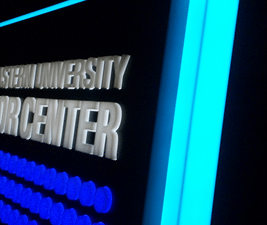
LEDs have become commonplace in our modern society. We see them on our smartphones. They illuminate many different indicators on our appliances and in our cars. Soon, they’ll be illuminating your home and your workplace. They work so well, in fact, that lately we’ve begun retrofitting all types of exterior and interior signage with them. Aside from their brightness, long life, and power-saving nature, one of the most exciting attributes is their ability to change color. In point of fact, however, no single LED actually does change color. What the human eye perceives as a color changing LED is actually a group of LEDs housed together, and packaged with a tiny computer that controls their operation. In the usual configuration,
Improving Retail Signage
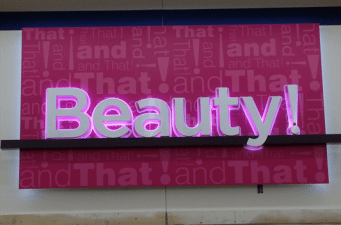
Retail sales depend greatly on giving prospective customers a clear idea of what you’re selling, and then making it fast and easy for them to get what they want, when they want it. That’s why retail stores often live (or die) on the quality of their signage. Whether you are running a “Mom and Pop” sandwich shop or coordinating brand and local signage for a regional chain, here are some simple suggestions to help you open a new store, or improve the signage in any retail operation: Keep Your Signs Looking New In most retail situations, nothing turns off potential customers more quickly and permanently than the feeling your store is old, out of date, or dirty. Your signage serves
Inside Metro Signs – Elena Berry, Director of Business Development

Signs may be in her blood. Elena started her career managing national accounts at a small sign company in Haverhill, MA, before moving to another sign company in Hudson, NH. Polishing her skills and learning the business, she pined for an opportunity to combine national accounts marketing with business development and trade show action. Just about the time she began to feel confined, she learned of an opportunity at Metro Sign and Awning, and leaped at it. It was a perfect fit. Elena was looking to flex her marketing muscles, and Metro Sign was looking to grow. “We have great people in all the right positions, ” she explains, “and I have all the tools to create my own success.
Crossing The MBTA’s Newest “T”
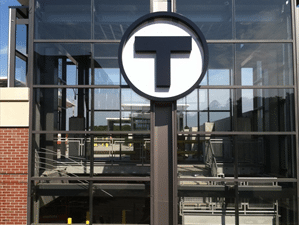
Our Metro Sign and Awning install crew has been working diligently this week with Suffolk Construction at The Beverly Depot. We’ve almost finished installing the new “T” Logo and the facility’s way-finding signs. Thanks for the opportunity to service another MBTA and Suffolk Project; we appreciate your valued partnership. The new parking facility at the Beverly station is slated to open for public use on Saturday, August 3rd, 2014. It will take another couple of months to finish a similar facility at the Salem station, probably not opening until October according to the Salem News. Together, the two new garages will allow commuters to park more than 1,200 vehicles, which will greatly ease the current parking crunch in those locations.
How Many Kinds of Signs Can You Name?
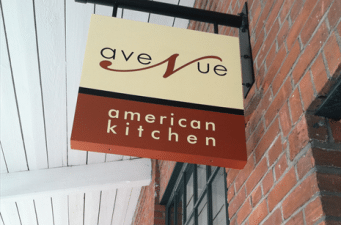
How Many Kinds of Signs Can You Name? There are more than 206 bones in the human body, each one with its own name, from cranial bones to vertebrae, and from the vomer to the clavicle. That’s more bones than types of signage, but our industry nevertheless can marshal quite a line-up of different ways to convey messages to people. How many different types of signs can you name? Below are some photos, with a link that lets you see what that type of sign is called. Sign Type 1: This high-profile sign is the kind you’ll see outside many developments, such as shopping centers, highway service establishments, or multi-tenant commercial parks. Depending on circumstances and visual
Convert Your Existing Signs to LED Technology – Part 2
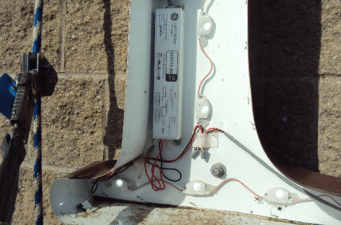
Convert Your Existing Signs to LED Technology – Part 2 Last time, we discussed some of the benefits that make LED illumination such a great option for signage, much better than the neon or fluorescent tubes currently in use in so many existing signs. This time, let’s assume you’ve been convinced to consider a switch to LEDs. Here’s what’s involved in making the changeover: Simple Conversion Process The first step is to see what you’ve got right now. Our crew comes to your location(s) and inspects your current signage. We’re interested not only in the design, but the physical sizes and shapes where illumination is required. We not only measure each linear run of lighting, but we also look at
Inside Metro Signs – Corey Fisher, Partner, V.P. Operations

With a degree in Mechanical Engineering from Worcester Polytechnic Institute (WPI), Corey Fisher is a man who knows how to make things. He enjoys the challenges that come with the signage industry and takes pride in the products he helps create. Corey first started with Metro Sign and Awning about 10 years ago as a technician, a role which soon developed into an estimating position. About a year later, an opportunity arose for Corey to join in partnership with the existing owners: Brian Chipman and Tom Dunn. “Throughout school, I was always interested in CAD design and CNC machining, which just so happens to have many applications within the signage industry today,” says Corey, “so I asked Brian and Tom
Working With General Contractors – Our Safety Program
It’s a little bit too technical for the kind of blog this is primarily intended to be, but for a long time we have wanted to write up something about the extensive efforts we make to keep ourselves qualified for work with General Contractors. As you may know, GCs on major construction projects are subject to a wide range of standards and specifications that control not only how they operate, but how the subcontractors they hire (that would be us!) must also operate. If we don’t conform to their high standards, GCs simply cannot trust us with any work. So we here at Metro Sign and Awning spend a considerable amount of time, effort, and resources making sure we’re qualified
Helping You Find Your Way Around
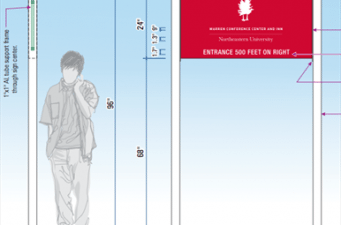
If you’d watched us work for the past couple of weeks, you might’ve thought we were going around in circles. And in a way, you’d be right. We’ve been working on another large wayfinding signage project, and the number of details outnumber the number of signs by about a thousandfold. We’re not complaining, or bragging – that’s just the way wayfinding projects (and most others, really) seem to go. If you’d like to see a few of the details and understand some of the principles behind a wayfinding signage project, the AIA (American Institute of Architects) created an overview document a few years ago, which is now freely available. If you have questions about wayfinding signage or would like to
Inside Metro Signs – Jamie Potvin, Designer

For Jamie Potvin, the process starts when information about a new project begins to trickle in through one of the sales team members. Over the next days and weeks, she steeps herself in the client’s history and strategy, various signage suggestions, client and team requests, and specific requirements, as well as any graphic elements such as client logos that are already available. She also likes to look at comparable signage of the same size and classifications that’s already “out there” in the community. Then she dives into the design process. With more than fifteen years of experience, Jamie likes to start a project by working on some “looks”: rough sketches and simplified renderings of the new sign’s essentials. She’s usually
Categories
Recent Posts
- Do You Need Custom ADA Signs for a Renovation or New Build in 2026? Here’s What to Know
- How the IRS Section 179 Tax Deduction Can Save You Money on New Commercial Signage
- Common Mistakes in Interior Signage — And How to Avoid Them Going Into the New Year
- Beyond Braille: What Goes Into High-Quality Interior ADA Signage?
- How to Choose the Right Signage for Your Industry
Tags



Copyright 2022 MetroSign and Awning, All rights reserved | Privacy Statement | Terms of Use